N,N '-m-phenylene bismaleimide HA-8
Ⅰ. Introduction
Product name: N,N '-m-phenylene bismaleimide
Abbreviation: HA-8/PDM/HVA-2
Molecular formula: C14H8N2O4
Molecular weight: 268
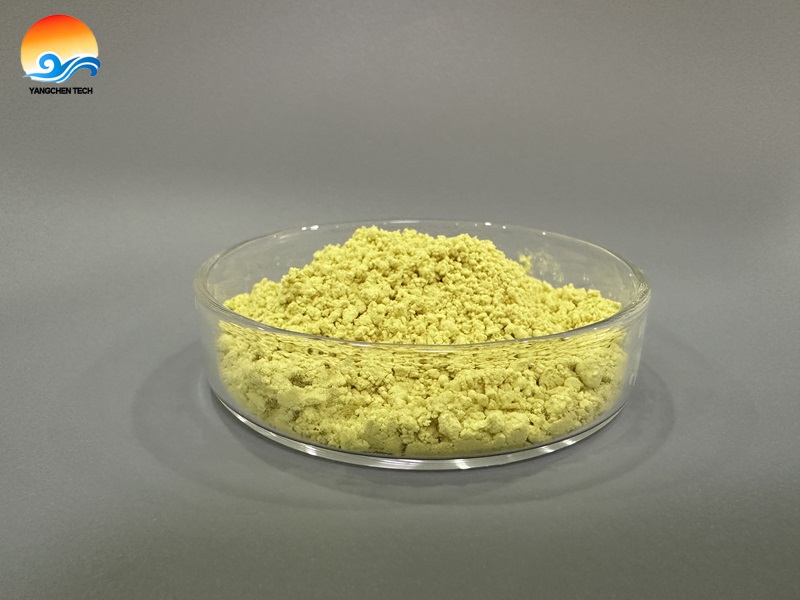
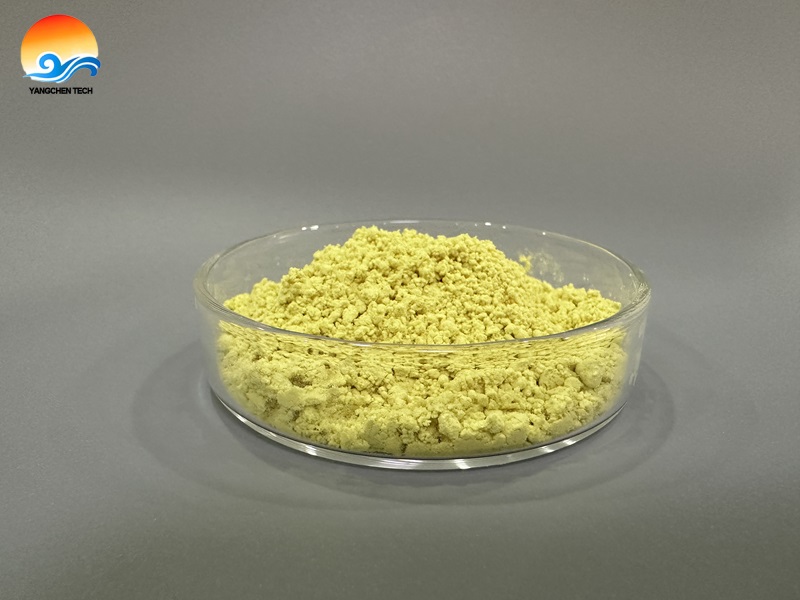
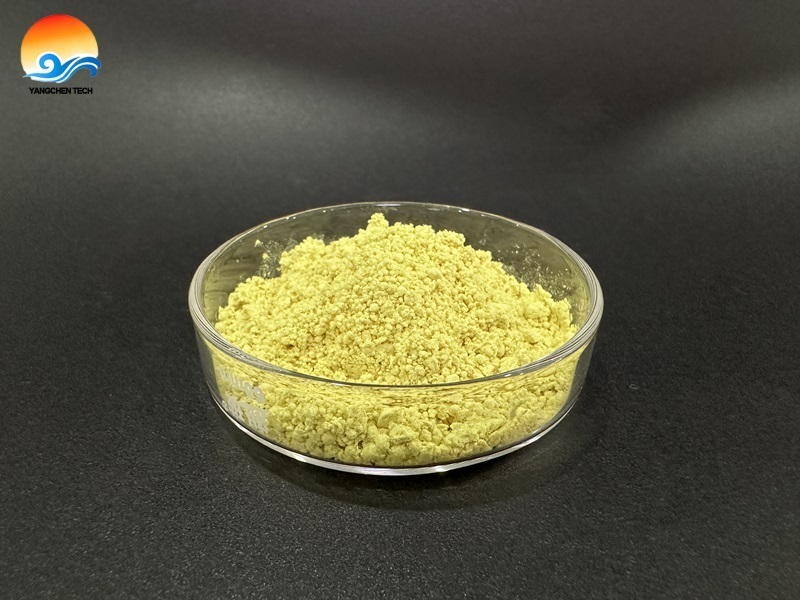
Physicochemical properties: Yellow or brown-yellow powder, specific gravity 1.44, soluble in dioxycontinental ring, tetrahydrofuran and hot acetone, insoluble in petroleum bond, methylene chloride, carbon tetrachloride, benzene and water.
CAS NO: 3006-93-7
Appearance:
Structure type:
Ⅱ.Technical indicators
Items
Refers to the standard
Appearance
Yellow powder
Melting point, ℃
195℃or higher
Burning residue, %
0.5% or less
Heat reduction, %
0.5% or less
Acid value, %
0.9% or less
Sieve residue, 325 mesh
0.5% or less
Ⅲ. Use
N,N '-m-phenylene bismaleimide manufactured by Yangchen Tech (also known as PDM or HVA-2) is a multifunctional rubber additive used as a vulcanizing agent in rubber processing, as a secondary vulcanizing agent in peroxide systems, and as an anti-curl agent and casting agent. It can be used in general rubber as well as specialty rubber and plastic systems.
In natural rubber adhesive, combining with sulfur can prevent the return of moisture from vulcanization, improve heat resistance, reduce heat generation, aging resistance, improve the adhesion between rubber and cord and the modulus of vulcanized rubber. Used in shoulder rubber, cushion layer and other rubber materials, it can solve the shoulder hollow problem of bias truck tires, also can be used in large-size thick products of natural rubber and various rubber miscellaneous products.
As an auxiliary vulcanizing agent in special rubbers such as chloroprene rubber, chlorosulphonated polyethylene rubber, styrene butadiene rubber, nitrile rubber, isoprene rubber, butyl rubber, bromobutyl rubber, acrylate rubber, silicone rubber and elastomer rubber, it can significantly improve cross-linking performance, improve heat resistance, suitable for high temperature vulcanization system, and reduce the compression permanent deformation is very obvious. It also reduces the amount of peroxide, prevents the rubber from burning during processing, and improves the adhesive strength between the rubber and the cord and metal.
PDM is a sulfur-free vulcanizing agent, used for cable rubber, it can replace thiazoles, thiuram class and other sulfur-containing vulcanizing agents, to solve the copper wire and copper electrical appliances due to contact with sulfur-containing vulcanizing agent copper sulfide pollution black problem.
PDM is a sulfur-free vulcanizing agent for cable rubber, which can replace sulfur-containing vulcanizing agents such as thiazole and thiuram to solve the problem of blackening of copper wire and copper electrical appliance due to sulfur-containing agents and copper sulfide contamination.
If you have any questions,pls feel free to contact: business@xysjgm.com
N,N'-m-Phenylene bismaleimide has a variety of applications in tire manufacturing. This chemical can be used as a multifunctional rubber additive, either as a vulcanizing agent or as a co-curing agent in peroxide systems. In addition, it can be used as an anti-scorch agent and viscosity builder.
In natural rubber, N,N'-m-Phenylene bismaleimide, when used in combination with sulfur, prevents vulcanization regression, improves heat resistance, reduces heat generation, enhances aging resistance, and improves the adhesion between the rubber and the cord as well as the modulus of the vulcanized rubber. Therefore, it has a wide range of applications in rubber products such as shoulder rubber and cushion layer of heavy-duty tires, which helps to solve the problem of shoulder void in bias-loaded tires. At the same time, this additive is also suitable for large-size thick products of natural rubber and various rubber miscellaneous products.
In special rubber such as chloroprene rubber, chlorosulfonated polyethylene rubber, styrene butadiene rubber, nitrile rubber, isoprene rubber, butyl rubber, bromobutyl rubber, acrylate rubber, silicone rubber and rubber-plastic concurrently with rubber, N, N'-m-phenylene bismaleimide as an auxiliary vulcanizing agent, can significantly improve the performance of crosslinking, improve heat resistance, especially suitable for high-temperature vulcanization system. It can also significantly reduce the compression permanent deformation, reduce the amount of peroxide, to prevent the rubber in the process of scorching, and improve the rubber and cord and metal bonding strength.
The specific dosage of N,N'- m-phenylene bismaleimide will vary depending on the application. For example, when used as an anti-scorch agent, the dosage is usually in the range of 0.5-1.0 parts, when used as a vulcanizing agent, the dosage is 2-3 parts, when used to improve compression set, the dosage is 1.5 parts, and when used to improve bond strength, the dosage is in the range of 0.5-5.0 parts.
Overall, N,N'- m-phenylene bismaleimide plays an important role in tire manufacturing and offers the possibility of manufacturing better quality and more durable tires by improving the properties and processing of rubber.
If you have any questions,pls feel free to contact: business@xysjgm.com
HVA-2 Application in Rubber Tire: The Ultimate Solution for Reversion and Shoulder Separation
-By Yangchen Advanced Materials – A Leading HVA-2 Manufacturer
If you are a tire compounder or a rubber technologist, you have probably faced two persistent nightmares: reversion and shoulder separation. These issues not only reduce tire life but also increase warranty claims and damage brand reputation.
HVA-2 (N,N’-m-Phenylene bismaleimide) – also known as PDM or HA-8 – is a multifunctional rubber additive that effectively eliminates these problems. In this article, we will explore the HVA-2 application in rubber tire manufacturing, backed by real performance data, and explain why Yangchentech is your most reliable supply partner.
1.What is HVA-2?
HVA-2 is an aromatic bismaleimide with two reactive double bonds. It acts as:
Anti-reversion agent in sulfur-cured natural rubber
Co-agent in peroxide systems
Adhesion promoter between rubber and cords
Heat-resistant modifier for thick rubber articles
Its chemical structure allows it to form thermally stable carbon-carbon crosslinks, which do not break down under prolonged high-temperature vulcanization.
2.Why Does the Tire Industry Need HVA-2?
Modern tire manufacturing demands higher productivity (shorter cure times) and larger, heavier loads (more heat generation). Conventional sulfur vulcanization produces polysulfidic bonds that are stable only within a narrow temperature window. Once the temperature exceeds 150°C for extended periods (typical in thick tire components), reversion occurs: crosslinks break, network density drops, and mechanical properties collapse.
Consequences of reversion in tires:
Reduced tread stiffness and tear strength
Shoulder separation – a common failure mode in bias truck tires
Poor belt edge adhesion
Lower retention of dynamic properties
HVA-2 solves this by generating hybrid crosslinks that resist thermal cleavage, maintaining torque even after 30 minutes at 170°C.
3.Key Benefits of HVA-2 Application in Rubber Tire
Eliminates Reversion – Proven by Data
Testing Condition
Conventional Sulfur Cure
Sulfur + 2.5 phr HVA-2
Torque retention after 170°C×30 min
85–88%
98–100%
Tensile strength retention (100°C×72h)
72–78%
90–95%
Modulus at 300% (MPa)
Baseline
+15%
With HVA-2, your tire compound stays robust even under severe overcure conditions.
Prevents Shoulder Separation in Bias Truck Tires
Adding 2–3 phr of HVA-2 to the shoulder pad and breaker compounds significantly improves the adhesion between natural rubber and nylon/polyester cords. The maleimide ring reacts with amino groups on the fiber surface, forming a covalent bond that withstands dynamic flexing and heat aging.
Result: Reduced scrap rates and fewer field failures.
Improves Heat Aging Resistance
HVA-2’s hybrid crosslinks do not revert, so the rubber retains its mechanical integrity after prolonged heat exposure. This translates into longer tire life for long-haul trucks and OTR vehicles.
Enhances Processing Safety
At low dosages (0.5–1.0 phr), HVA-2 acts as a scorch retarder, delaying Mooney scorch time by 15–20% without affecting cure rate. This gives you a wider processing window, especially during hot summer shop-floor conditions.