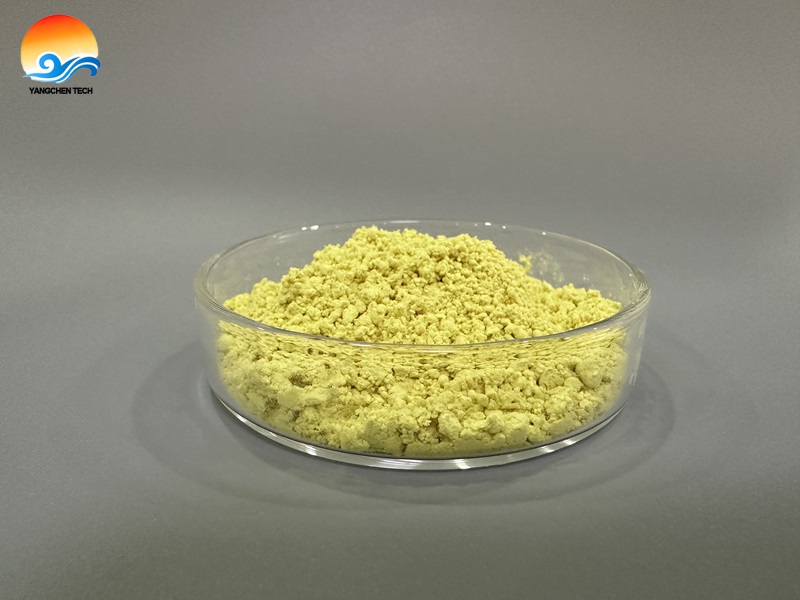
HA-8 (N,N'-m-phenylene bismaleimide): Replacing Physical Adsorption with Chemical Bonding for Superior Rubber-Metal Adhesion
-Solving the bonding challenges that plague automotive brake hoses, engine mounts, and high-pressure oil pipes.
If you manufacture rubber products that must bond to metal—automotive brake hoses, engine vibration dampers, high-pressure oil pipes, or tire cord—you've likely encountered the same persistent challenge: rubber and metal don't naturally stick together.
Traditional adhesion systems rely on "resorcinol-formaldehyde-silica" (RF) systems or RFL dipping processes. These methods work through physical adsorption—essentially, surface-level attraction. Under normal temperature and static conditions, this may suffice. But introduce high heat, dynamic loading, or long-term aging, and the interface becomes the weakest link in your product. Delamination. Separation. Failure.
HA-8 (N,N'-m-phenylene bismaleimide, also known as PDM or HVA-2) offers a fundamentally different approach: chemical bonding through a "molecular bridge" mechanism.
The "Molecular Bridge" Mechanism: From Physical Adsorption to Chemical Bonding
HA-8's chemical structure features two highly reactive maleimide groups at each end of the molecule. This dual-functional structure is what makes it unique:
One end reacts with rubber molecular chains during vulcanization, forming cross-links
The other end reacts with active groups on metal surfaces or fiber polymers, creating strong chemical bonds
This "molecular bridge" transforms rubber-metal adhesion from physical adsorption into permanent chemical bonding. Studies show that when HA-8 (HVA-2) is used as both a co-vulcanizing agent and an adhesion promoter, bonding strength can reach 4.32 kN/m with 100% rubber coverage on the substrate surface.
Key Functional Benefits:
Function
Benefit
Vulcanizing Agent
Participates directly in cross-linking reactions during rubber processing
Co-vulcanizing Agent
Accelerates cross-linking in peroxide systems
Anti-scorch Agent
Prevents premature vulcanization during processing, extending safe processing time
Tackifier
Increases adhesion between rubber and fibers, metals, and other materials
Anti-reversion Agent
Prevents reversion in sulfur-cured natural rubber, improving heat resistance
Heat Resistance and Anti-Reversion Performance
HA-8's aromatic heterocyclic molecular structure gives it exceptional thermal stability. In peroxide vulcanization systems, HA-8 as a co-vulcanizing agent:
Increases cross-linking density
Inhibits polymer chain scission at high temperatures
Prevents reversion—the degradation of cross-linked networks during prolonged high-temperature exposure
The result? Bonding interfaces that maintain their integrity under extreme conditions.
Welcome contact us for learning more about HA-8(N,N'-m-phenylene bismaleimide)!